
WELCOME AUTHORS
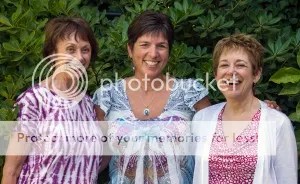
Linda Joy Myers, Kate Farrell and Amber Lea Starfire
Connect with Linda Joy Myers, Kate Farrell and Amber Lea Starfire at these sites:


GUEST POST
“Legacy of the ‘60s and ‘70s and What It Means for Women Today”
by Elise Frances Miller, Winner Second Place, Prose
In the early ‘70s, I was doing just what I wanted to do: teaching three art history and humanities classes and conducting research as a college instructor. I was not happy being “part-time,” underpaid, and with no benefits. I did not consider myself an artist, though I still tried my hand at a variety of media in those days. I admired artists, especially women, who put their work out there in public, sometimes defying a parent or spouse, usually for very little remuneration.
Then I joined an organization called “Women Artists It’s Time” (W.A.I.T). The mission was clear: find ways for female artists’ work to be appreciated and understood on a level commensurate with that of male artists. We had role models from Berthe Morisot to Georgia O’Keefe, Louise Nevelson to Joan Brown, but these pioneers did not have many peers. In the realm of art history, Women Artists: 1550-1950 published in 1976 by Linda Nochlin and Anne Sutherland Harris took academic art history departments and the stuffy College Art Association by storm.
At universities in the late ‘60s and early ‘70s, almost no female artists made it into the curriculum. Nochlin and Harris broke the Western, white, male version of art history, and encouraged others, both men and women, to broaden their research for international, ethnic and gender equity in publications.
Our small efforts in W.A.I.T. soon blossomed, not because more women chose to go into art, but because more of them became known. We also celebrated the recognition of women’s “crafts” by art museums. Quilting, weaving, needlework and other handicrafts were accepted as subjects for both historical and current exhibitions.
By the 1970s and ‘80s, I was writing art reviews for major newspapers and magazines. Judy Chicago, Betye Saar, Eleanor Antin and Jennifer Bartlett were just a few of my favorite artists to review. As galleries began to exhibit women’s artwork, I encountered no resistance to featuring them in my articles.
Today there is no lack of women artists. Some of these have made a splash, but as in other fields, the struggle is not behind us. Women still lag behind men both in exposure and remuneration.
As a member of W.A.I.T., I learned that when we band together, boosting our sense of purpose, we push forward, and best of all, we create in diverse fields, guilt-free, with families and all. This personal growth was important to the expansion of social, political and professional roles for women in the 1970s, and in turn, women’s movement activity also enhanced the individual’s journey.
The Times They Were A-Changing: Women Remember the ‘60s and ‘70s preserves the record of that two-way nourishment in varied circumstances. As this anthology shows so well, in tandem with the political struggles, social experiments, and hard-fought gains that are the legacy for today’s women, there was always the girl becoming a woman, unsure, seeking strength through collaboration, building the story one scene at a time. Since our era, as never before, that has been the way it is done.
 Elise Frances Miller’s novel, A Time to Cast Away Stones (Sand Hill Review Press, June, 2012), is set in 1968 Berkeley and Paris. With degrees from UC Berkeley and UCLA, Elise began writing about arts for the Los Angeles Times, Art News and San Diego Magazine. She taught high school and college humanities, and served as communications director at San Diego State University and Stanford. Her short stories have appeared in The Sand Hill Review (fiction editor, 2008), Fault Zone: Stepping Up to the Edge, and online. Her novel and its historical background are described at http://www.elisefmiller.com.

ABOUT THE BOOK
Just in time for the holidays, Linda Joy Myers, Kate Farrell and Amber Lea Starfire launch their anthology Times They Were A-Changing: Women Remember the ’60s and ’70s. The book is the perfect gift for opening discussions with friends and family members and illustrating what a powerful time the ’60s and ’70s truly were.
Forty-eight powerful stories and poems etch in vivid detail breakthrough moments experienced by women during the life-changing era that was the ’60s and ’70s. These women rode the sexual revolution with newfound freedom, struggled for identity in divorce courts and boardrooms, and took political action in street marches. They pushed through the boundaries, trampled the taboos, and felt the pain and joy of new experiences. And finally, here, they tell it like it was.
Through this collection of women’s stories, we celebrate the women of the ’60s and ’70s and the importance of their legacy.
BOOK DETAILS:
Paperback: 354 pages
Publisher: She Writes Press
Publication Date: Sept. 8, 2013
ISBN-10: 1938314042
ISBN-13: 978-1938314049PURCHASE LINKS:


THANKS TO RENEE AT WOW!,
I HAVE ONE (1) COPY TO GIVE AWAY.
OPEN TO U.S. RESIDENTS
FILL OUT RAFFLECOPTER ENTRY FORM BELOW
GIVEAWAY ENDS JANUARY 1st AT 6PM EST

VIA EMAIL AND WILL HAVE 48 HOURS TO RESPOND
OR ANOTHER NAME WILL BE CHOSEN
YOUR JAVA SCRIPT MAY NEED TO BE UPDATED
IF YOU AR EXPERIENCING DIFFICULTY
USING THE RAFFLECOPTER ENTRY FORM


 New York Times bestselling author Jill Shalvis lives in a small town in the Sierras full of quirky characters. Any resemblance to the quirky characters in her books is, um, mostly coincidental. Look for Jill’s bestselling, award-winning books wherever romances are sold and visit her website for a complete book list and daily blog detailing her city-girl-living-in-the-mountains adventures.
 New York Times bestselling author Jill Shalvis lives in a small town in the Sierras full of quirky characters. Any resemblance to the quirky characters in her books is, um, mostly coincidental. Look for Jill’s bestselling, award-winning books wherever romances are sold and visit her website for a complete book list and daily blog detailing her city-girl-living-in-the-mountains adventures.
 Kristen Ashley grew up in Brownsburg, Indiana, and has lived in Denver, Colorado, and the West Country of England. Thus she has been blessed to have friends and family around the globe. Her posse is loopy (to say the least) but loopy is good when you want to write.
 Hope Ramsay grew up on the North Shore of Long Island, but every summer Momma would pack her off under the care of Aunt Annie to go visiting with relatives in the midlands of South Carolina. Her extended family includes its share of colorful aunts and uncles, as well as cousins by the dozens, who provide the fodder for the characters you’ll find in Last Chance, South Carolina. She’s a two-time finalist in the Golden Heart and is married to a good ol’ Georgia boy who resembles every single one of her heroes. She lives in Fairfax, Virginia, where you can often find her on the back deck, picking on her thirty-five-year-old Martin guitar.
 Molly Cannon lives a charmed life in Texas with her nearly perfect husband and extremely large cat Nelson. When she’s not writing, she spends her days reading, taking dance classes with the hubby and watching all kinds of sports. Molly has three children, all married to terrific people and two wonderful grandchildren. Life is good!
 Known for her intensely emotional stories, Marilyn Pappano is the USA Today bestselling author of nearly eighty books. She has made regular appearances on bestseller lists and has received recognition for her work in the form of numerous awards. Though her husband’s Navy career took them across the United States, he and Ms. Pappano now live in Oklahoma high on a hill that overlooks her hometown. They have one son and daughter-in-law, an adorable grandson, and a pack of mischievous dogs.


